Hyperthermia Therapy in Integrative Oncology
Using Therapeutic Heat to Support Immune Function, Circulation, and the Healing Terrain
Cancer treatment places unique and cumulative demands on the body. Beyond the direct impact of the disease, patients often experience impaired circulation, rising inflammation, immune suppression, and reduced metabolic resilience, especially during chemotherapy, radiation, or immunotherapy. Even when conventional treatment is effective, these physiologic stresses can make recovery slower and tolerance more difficult.
Hyperthermia therapy has a long-standing role in integrative oncology precisely because it addresses these systemic challenges. By using controlled, therapeutic heat, hyperthermia engages the body’s natural immune signaling, improves perfusion, and creates physiologic conditions that are difficult for cancer cells, but supportive for healthy tissue.
At the CIOFM clinic in Blue Ash, OH, hyperthermia is used as a medical therapy, not a wellness intervention. It is carefully selected, monitored, and integrated into a patient’s broader treatment plan based on diagnosis, phase of care, and overall physiologic reserve.
The Physiologic Rationale for Heat in Cancer Care
Why Heat Is a Powerful Immune Signal
Heat plays a fundamental and highly coordinated role in immune defense. Fever is not a random or harmful reaction—it is an evolutionarily conserved strategy the body uses to improve immune efficiency.
When core temperature rises in a controlled way, multiple immune processes become more effective at the same time.
Therapeutic heat enhances immune activity in several important ways:
Improved white blood cell mobility
Elevated temperature increases circulation and allows immune cells to move more quickly through the bloodstream and tissues, improving their ability to reach areas of concern.Enhanced antigen presentation
Heat improves the process by which immune cells display fragments of abnormal or damaged cells to one another, strengthening immune recognition and coordination.Activation of heat shock proteins (HSPs)
Heat stimulates the production of heat shock proteins—molecular messengers that help stabilize stressed cells while signaling immune cells to pay attention to tissue under strain.
Together, these effects amplify immune communication rather than simply increasing immune activity in a nonspecific way.
Why Cancer Cells Respond Differently to Heat
Cancer cells exist in biologically compromised environments and are far less adaptable to thermal stress than healthy tissue.
Tumors commonly exhibit:
Disorganized, fragile blood supply that limits heat regulation
Poor oxygen delivery and impaired nutrient exchange
Altered mitochondrial function and inefficient energy production
Reduced ability to activate protective stress-response pathways
Because of these limitations, cancer cells struggle to dissipate heat or recover from thermal stress.
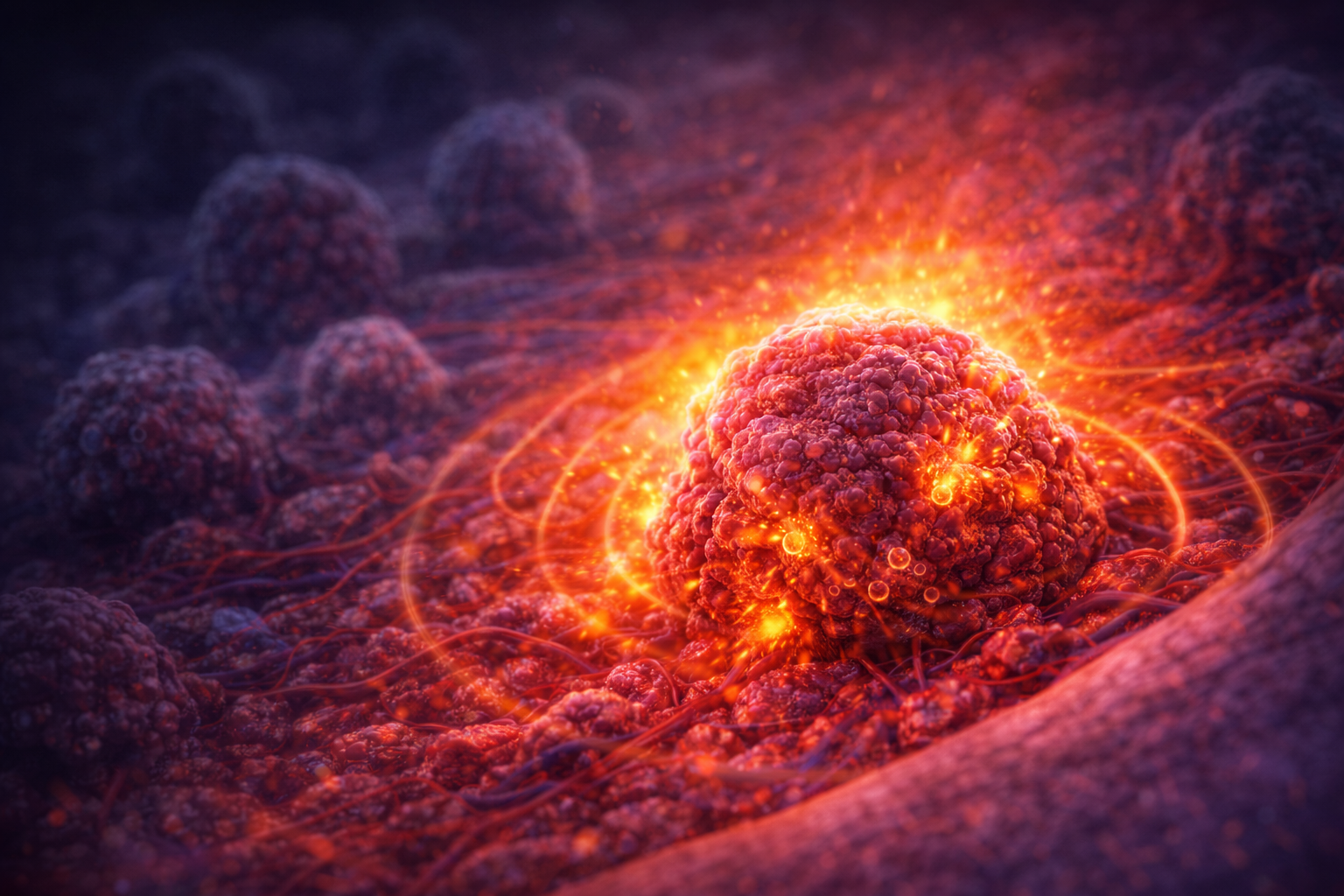
The Metabolic Impact of Therapeutic Heat
When exposed to controlled heat, cancer cells are more likely to experience:
Increased metabolic strain
Rising oxidative stress
Disruption of already fragile energy systems
Impaired DNA repair mechanisms
Healthy cells, by contrast, tend to be better oxygenated and more metabolically flexible. They are able to activate protective pathways and recover once heat exposure ends.
Shifting the Terrain, Not Attacking the Body
Hyperthermia does not work by directly “killing” tissue or overwhelming the system. Instead, it shifts the physiologic terrain in a way that favors immune recognition and cellular resilience.
By improving circulation, amplifying immune signaling, and selectively stressing vulnerable cancer cells, therapeutic heat supports the body’s innate ability to respond more effectively, especially during periods of significant physiologic demand.
Whole-Body Hyperthermia: Inducing a Systemic Immune Response
How Whole-Body Hyperthermia Is Performed
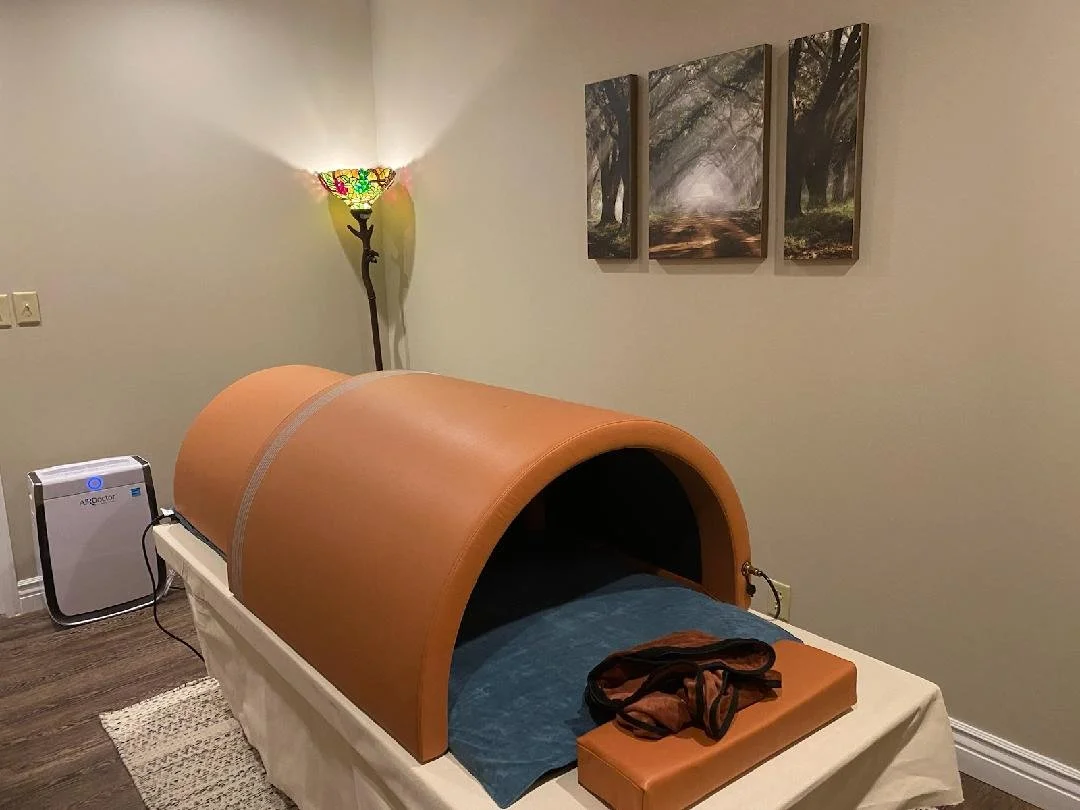
Whole-body hyperthermia involves a supervised, gradual elevation of core body temperature to create a controlled fever-range response. Unlike passive heat exposure, this process is medically monitored and adjusted in real time to ensure patient safety and tolerance.
During treatment:
Core temperature is slowly elevated and maintained within a therapeutic range
Circulation increases as blood vessels dilate
Oxygen delivery to tissues improves
Lymphatic flow accelerates, supporting detoxification
The goal is to engage immune signaling pathways without overwhelming the nervous or cardiovascular systems.
Cellular and Immune Effects of Whole-Body Hyperthermia
At a cellular level, whole-body hyperthermia:
Increases expression of heat shock proteins (HSPs), which act as immune messengers
Enhances dendritic cell activity, improving immune recognition of abnormal cells
Improves perfusion to tissues that may otherwise be poorly oxygenated
Systemically, this can support:
Improved immune surveillance
Reduced inflammatory stagnation
Greater physiologic coordination between immune, circulatory, and detox pathways
This is why whole-body hyperthermia is often considered during phases of care where systemic immune engagement is a therapeutic goal.
Patient Experience and Recovery
Patients often experience a deep, enveloping warmth during treatment, accompanied by sweating and muscle relaxation. Because hyperthermia creates real physiologic demand, post-treatment fatigue is common and expected. This reflects immune and metabolic activation rather than depletion.
Careful hydration, mineral support, and post-treatment rest are integral parts of the process and are addressed by the care team.
Localized Hyperthermia with Thermofield: Precision Heat Therapy
How Localized Hyperthermia Works
Localized hyperthermia is designed to deliver therapeutic heat to a specific tissue or region without raising overall core body temperature. Rather than creating a whole-body fever response, this approach allows clinicians to influence the tumor microenvironment directly and precisely.
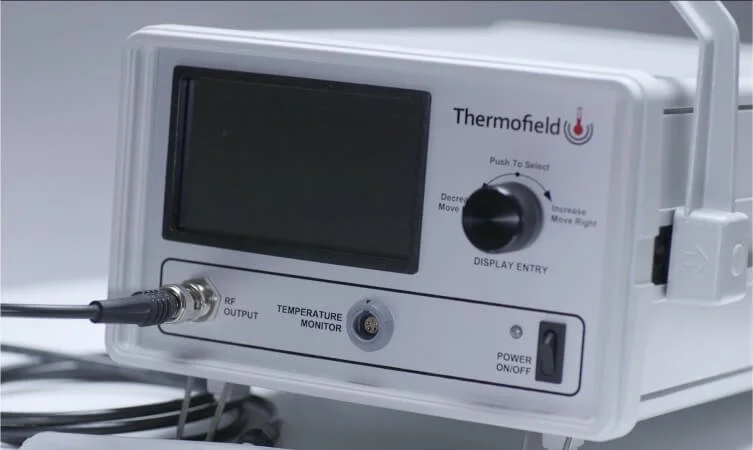
At our integrative oncology clinic, localized hyperthermia is delivered using the Thermofield® system, a technology that applies targeted electromagnetic energy to deeper tissues while continuously monitoring patient comfort and tissue response. As a Certified Thermofield (TM) Hyperthermia Center, CIOFM uses this modality as part of a broader integrative oncology strategy focused on terrain optimization, immune engagement, and metabolic support.
This focused approach is especially useful when the clinical goal is to influence a defined area without placing additional systemic demand on the body.
Precision Heat Delivery and Tissue Selectivity
The Thermofield TM system allows clinicians to localize energy delivery based on anatomy, tissue density, and clinical intent. Electromagnetic energy penetrates beyond superficial layers, gently raising tissue temperature in a controlled range that supports physiologic change without causing thermal injury.
This precision matters. Cancer-affected tissues often differ significantly from surrounding healthy tissue in terms of blood flow, oxygenation, and metabolic flexibility. Localized hyperthermia takes advantage of these differences rather than working against them.
Because treatment remains regional, patients can benefit from repeated sessions with minimal systemic stress, making it a practical option during active treatment or recovery phases.
Therapeutic Goals of Localized Hyperthermia
Localized hyperthermia is commonly used when the intention is to:
Increase circulation within a specific region
Tumor-adjacent tissues are often poorly perfused, limiting oxygen delivery, immune cell access, and metabolic waste removal. Heat-induced vasodilation improves microcirculation in these areas. Increases diffusion of conventional or integrative therapies, maximizing intratumoral concentrations.Apply localized metabolic stress
Cancer cells rely on fragile metabolic pathways and are less adaptable to thermal stress. Gentle, sustained heat increases energy demand in cells already operating near metabolic limits.Support immune activity at the tissue level
Improving blood flow and cellular signaling helps immune cells access and survey the local environment more effectively.
Rather than targeting cancer cells directly, this approach works by reshaping the local conditions that influence cellular behavior.
Patient Tolerance and Clinical Use
Most patients describe localized hyperthermia as comfortable and manageable. The sensation is typically a gradual warmth rather than an intense heat. Treatments are adjusted dynamically based on tissue response and patient feedback.
Localized hyperthermia can often be used more frequently than whole-body hyperthermia and may be integrated alongside other localized or systemic therapies as part of a coordinated plan. A burning sensation is possible, and it’s important to let your provider know if you experience any discomfort.
Safety, Monitoring, and Clinical Judgment
Hyperthermia is not appropriate for every patient at every stage of care. Cardiovascular stability, autonomic nervous system function, hydration status, and overall resilience all influence suitability.
At CIOFM:
Patients are monitored clinically throughout treatment
Sessions are supervised by trained clinical staff
Adjustments are made immediately if tolerance changes
In some cases, hyperthermia may be deferred or modified in favor of other supportive therapies that better match a patient’s current physiologic state.

Integrating Hyperthermia Into a Comprehensive Treatment Plan
Hyperthermia is never used as a stand-alone therapy. Its effectiveness depends on timing, sequencing, and integration with other aspects of care, including immune support, metabolic therapies, and recovery strategies.
For some patients, hyperthermia is most appropriate during active treatment. For others, it may be used during recovery phases or intermittently as part of long-term terrain support. These decisions are guided by ongoing assessment and patient response, not rigid protocols.
Individualization Over Standardization
There is no universal hyperthermia protocol. Frequency, duration, and modality are individualized based on:
Diagnosis and disease behavior
Current treatment phase
Patient tolerance and recovery capacity
Overall treatment goals
This flexibility allows hyperthermia to support the body without adding unnecessary physiologic burden.
Supporting the Body’s Intelligence Through Heat
Hyperthermia therapy reflects a core principle of integrative oncology: supporting the body’s innate capacity to recognize, adapt, and heal. When applied thoughtfully, therapeutic heat can improve immune coordination, circulation, and metabolic balance at times when the body is under extraordinary stress.
At CIOFM, hyperthermia is used with intention, restraint, and respect for the complexity of each patient’s physiology. Our goal is not to push the body harder—but to help it work more effectively.
If you would like to explore whether hyperthermia may be appropriate as part of your care, we invite you to apply for a Discovery Call or discuss this option with your CIOFM care team.
Disclaimer:
The information provided in this article is for educational purposes only and is not intended to diagnose, treat, cure, or prevent any disease. Hyperthermia and other integrative therapies discussed are not substitutes for conventional medical care and may not be appropriate for every individual or at every stage of treatment. Always consult with your physician or qualified healthcare provider before starting or modifying any treatment plan.